
Coastal homeowners protect against hurricane wind loss by reinforcing structural weak points, specifically roofs, garage doors, and wall-to-roof connections. Brad Spurgeon Insurance Agency helps Texas Gulf Coast residents understand these physical defenses and how they impact insurance premiums. This guide covers fortified roof standards, garage door reinforcement, roof deck sealing, and continuous structural connections to help you secure your home effectively.
Fortified Roof Standards
Fortified roof standards are specific construction guidelines designed to prevent wind-driven rain intrusion and structural failure during high-velocity storms. In the Texas Gulf Coast region, standard roofing often fails when wind speeds exceed 100 mph, leading to catastrophic interior damage. Understanding these standards is the first step in protecting your investment.
Impact-Resistant Shingles
Impact-resistant shingles are asphalt shingles engineered to withstand the impact of hail and wind-blown debris. These shingles typically feature a fiberglass mat base and a thicker asphalt layer compared to standard 3-tab shingles. They are rated on a scale from Class 1 to Class 4, with Class 4 offering the highest resistance to impact. For additional details, review the Contact Insurance Carrier Brad.
Roof Geometry and Pitch
Roof geometry plays a critical role in wind uplift resistance. Steeper pitches generally perform better in high winds because they reduce the surface area exposed to direct wind pressure. However, the connection between the roof and the wall is more important than the pitch itself. A well-connected flat roof can outperform a poorly connected steep roof.
Underlayment and Flashing
Self-adhering underlayment is a synthetic material applied directly to the roof deck before shingles are installed. It creates a waterproof barrier that prevents wind-driven rain from penetrating the roof structure. Proper flashing installation around chimneys, vents, and skylights is equally vital to seal potential entry points for water and wind.
Garage Door Reinforcement
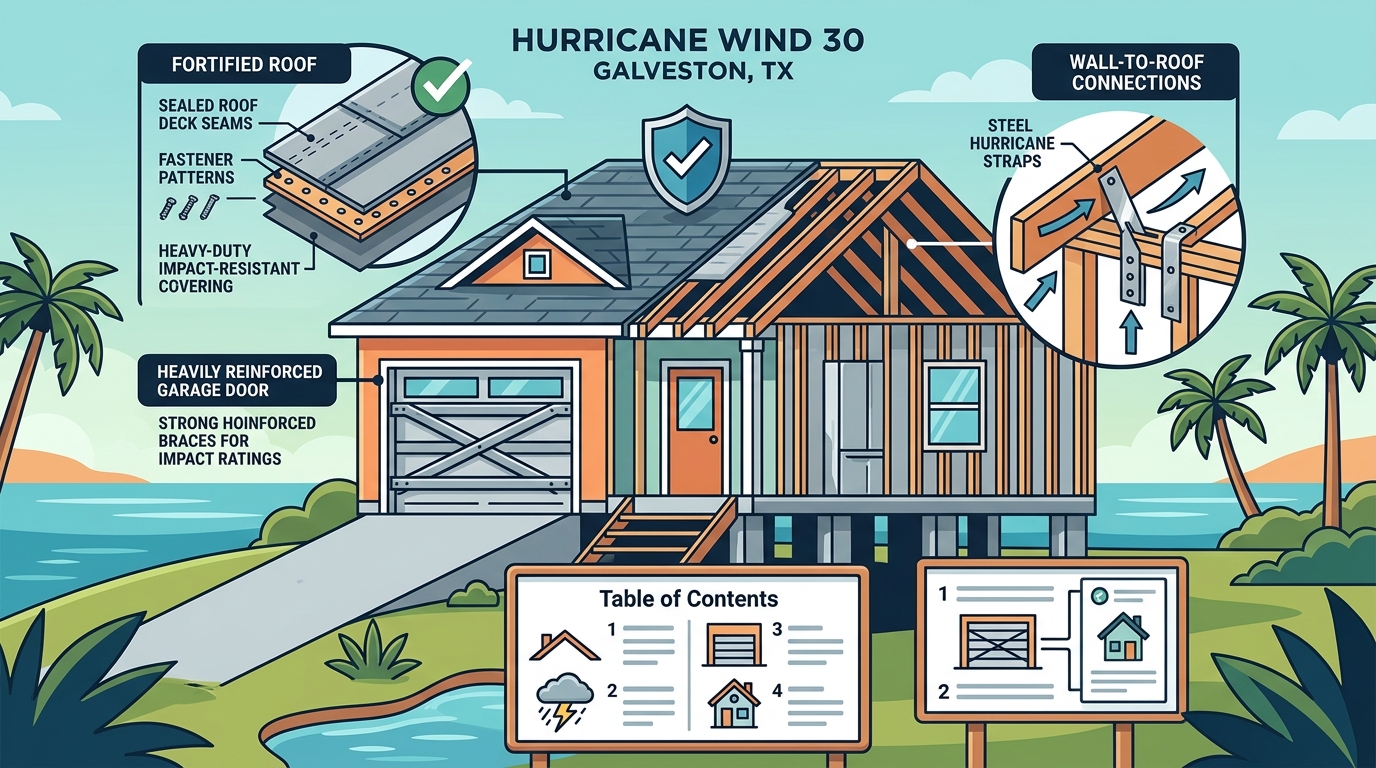
Garage door reinforcement is a critical mitigation strategy because garage doors are the largest single opening in most residential structures. When wind pressure builds up inside a garage, it can blow the door out of its tracks, leading to the collapse of the entire garage structure. This failure often compromises the structural integrity of the attached house.
Bracing and Track Reinforcement
Exterior Bracing
Exterior bracing systems are installed on the outside of the garage door to provide additional support. These systems are often more visible but can be highly effective in preventing door failure. They work by distributing the wind load across the entire door surface rather than concentrating it on the tracks.
Automatic Door Closures
Automatic door closures are devices that close the garage door when a power outage occurs. This feature is crucial because an open garage door during a storm allows wind to enter and pressurize the interior of the home. By keeping the door closed, these devices help maintain equal pressure inside and outside the structure.
Roof Deck Sealing
Roof deck sealing is the process of applying a waterproof membrane to the wooden or concrete surface of the roof before shingles are installed. This layer acts as a secondary defense against water intrusion if the shingles are damaged or lifted by wind. It is particularly important in areas prone to heavy rainfall and wind-driven rain.
Synthetic Underlayment
Synthetic underlayment is a modern alternative to traditional felt paper. It is stronger, more durable, and easier to install than felt. Synthetic underlayment provides a smooth, uniform surface for shingles to adhere to, which improves overall roof performance. It also has better tear resistance, which is important during high-wind events.
Sealants and Adhesives
Roof sealants are specialized compounds used to seal gaps and joints in the roof deck. They are applied around penetrations such as pipes, vents, and flashing to create a watertight seal. Adhesives are used to bond shingles to the roof deck, providing additional resistance to wind uplift. These products are essential for maintaining the integrity of the roof system.
Continuous Structural Connections
Continuous structural connections are hardware systems that tie the foundation, walls, and roof of a home together into a single, unified structure. These connections ensure that wind loads are transferred efficiently from the roof to the walls and then to the foundation. Without these connections, different parts of the house can move independently, leading to structural failure.
Hold-Downs and Anchor Bolts
Hold-downs are metal devices that secure the top of the wall studs to the roof framing. They prevent the walls from lifting off the foundation during high winds. Anchor bolts are steel rods that connect the foundation to the sill plate of the house. These bolts are tightened to ensure a secure connection between the concrete foundation and the wooden frame.
Straps and Clips
Straps and clips are metal connectors used to join framing members together. They are installed at corners, intersections, and other critical points in the structure. These connectors provide shear resistance, which helps the structure resist lateral forces from wind. Proper installation of straps and clips is essential for achieving a continuous load path.
Load Path Design
Load path design is the engineering process of ensuring that wind loads are transferred safely from the roof to the foundation. This involves identifying all potential load paths and ensuring that each one is adequately reinforced. A well-designed load path prevents localized failures that could compromise the entire structure.
Insurance Implications for Coastal Homes
Insurance implications for coastal homes are significant because wind mitigation features can directly impact premium costs. Insurers recognize that homes with fortified roofs, reinforced garage doors, and continuous structural connections are less likely to suffer severe damage. This reduced risk often translates into lower premiums and higher coverage limits.
Wind Mitigation Discounts
Wind mitigation discounts are reductions in insurance premiums offered to homeowners who have installed specific wind-resistant features. These discounts vary by insurer and region but can range from 5% to 25% of the total premium. To qualify for these discounts, homeowners typically need to provide documentation of the installed features, such as inspection reports or contractor invoices.
Policy Requirements
Policy requirements for coastal homes often include specific coverage limits for wind damage. Some policies may exclude certain types of damage or require separate windstorm policies. Homeowners should review their policies carefully to understand what is covered and what is excluded. Working with a knowledgeable insurance agent can help ensure that your policy provides adequate protection.
Documentation and Inspection
Key Takeaways
- Fortified roof standards include impact-resistant shingles, proper underlayment, and secure flashing to prevent wind-driven rain intrusion.
- Garage door reinforcement is critical because garage doors are the largest openings in most homes and can fail under high wind pressure.
- Roof deck sealing with synthetic underlayment provides a secondary waterproof barrier that protects the structure if shingles are damaged.
- Continuous structural connections tie the foundation, walls, and roof together, ensuring that wind loads are transferred safely.
- Wind mitigation features can lead to insurance discounts, reducing the cost of protecting your home.
- Proper documentation and inspection of wind mitigation features are necessary to qualify for insurance discounts.
- Working with a local insurance agency like Brad Spurgeon Insurance Agency can help you navigate the complexities of coastal home insurance.
- Regular maintenance and inspection of your home's structural components are essential for long-term protection against hurricane wind loss.
Frequently Asked Questions
What are fortified roof standards?
Why is garage door reinforcement important?
Garage door reinforcement is important because garage doors are the largest single openings in most homes. If they fail, they can compromise the structural integrity of the entire house.
What is roof deck sealing?
Roof deck sealing is the process of applying a waterproof membrane to the roof surface before shingles are installed. It acts as a secondary defense against water intrusion.
How do continuous structural connections work?
Continuous structural connections are hardware systems that tie the foundation, walls, and roof together. They ensure that wind loads are transferred efficiently through the structure.
Can wind mitigation features lower my insurance premiums?
How do I qualify for wind mitigation discounts?
To qualify for wind mitigation discounts, you typically need to provide documentation of the installed features, such as inspection reports or contractor invoices.
What should I look for in a coastal home insurance policy?
You should look for a policy that provides adequate coverage for wind damage and clearly outlines what is covered and what is excluded. Working with a knowledgeable agent can help ensure you have the right coverage.
How often should I inspect my home's structural components?
You should inspect your home's structural components at least once a year, and more frequently if you live in a high-risk area. Regular inspections can help identify potential issues before they become major problems.
Conclusion
Protecting your coastal home against hurricane wind loss requires a comprehensive approach that includes fortified roofs, reinforced garage doors, sealed roof decks, and continuous structural connections. These physical defenses not only protect your home but can also reduce your insurance costs. Brad Spurgeon Insurance Agency is dedicated to helping Texas Gulf Coast residents navigate these complexities and secure the right coverage for their homes. to discuss your specific needs and explore how we can help you protect your investment.