

Home insurance typically covers wind damage to your dwelling and personal property, but it excludes flood damage. For coastal residents in Galveston and Texas City, this distinction is critical. Brad Spurgeon Insurance Agency helps homeowners navigate these complex coverage gaps to ensure their properties are fully protected against both wind and water perils.
Understanding Hurricane Damage Types
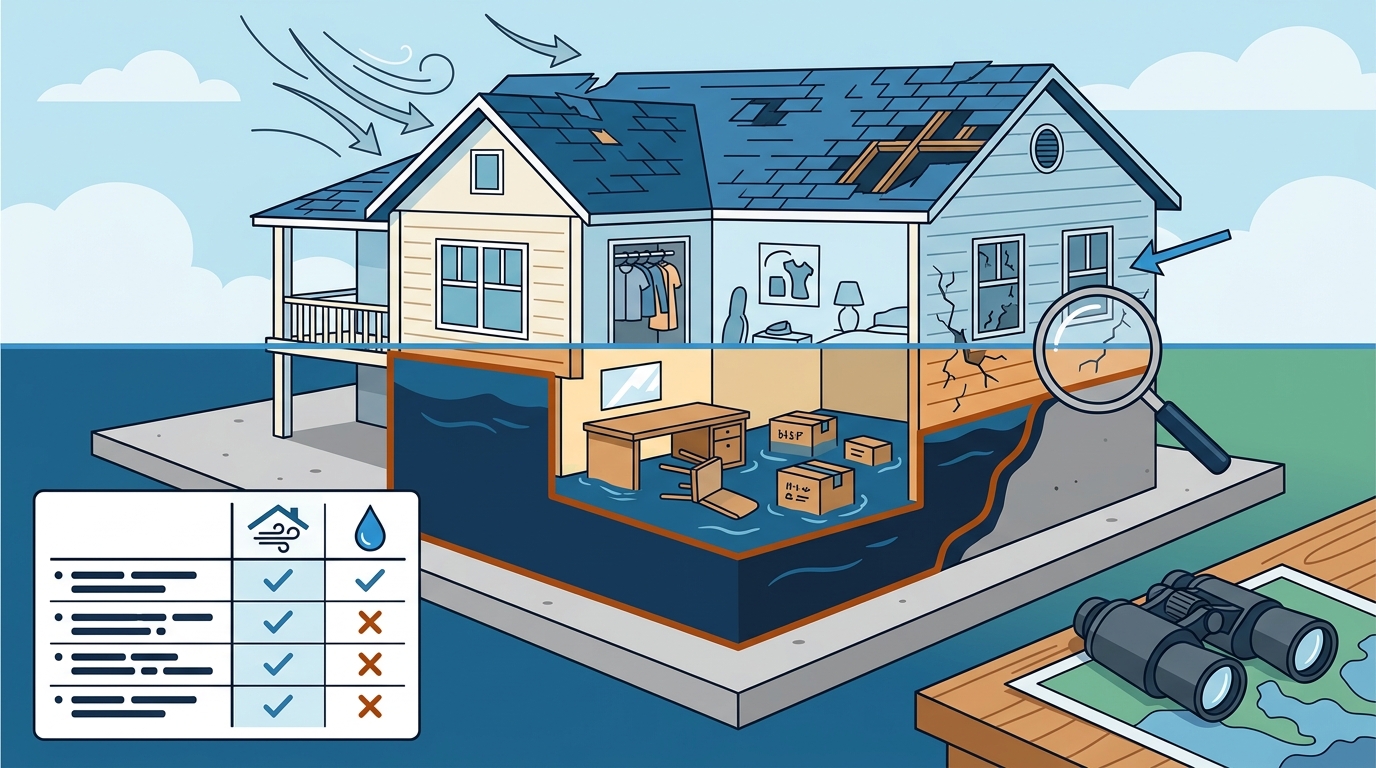
Hurricanes cause damage through two primary mechanisms: wind and water. Understanding the difference is the first step in securing proper coverage. Wind damage includes structural harm from high-velocity gusts, such as roof tearing, window shattering, and siding detachment. Water damage, however, is categorized differently by insurers. It includes storm surge, rainfall, and inland flooding.
Standard homeowners policies are designed to cover wind-related perils. They generally do not cover water that enters the home from outside due to flooding. This exclusion is a major source of financial risk for coastal homeowners. If a hurricane makes landfall, the resulting storm surge is considered a flood event, not a wind event, even if the wind caused the water to move. This technical distinction dictates which policy pays for the repairs.
Windstorm Coverage Details
Windstorm insurance is a specific type of property insurance that covers damage caused by high winds. In Texas, particularly in the coastal regions, windstorm coverage is often a separate policy from standard homeowners insurance. This separation exists because the risk of hurricane damage is significantly higher in these areas.
What Windstorm Policies Cover
Windstorm policies typically cover the physical structure of the home, including the roof, walls, and foundation. They also cover personal property inside the home that is damaged by wind. For example, if a tree falls on your house during a storm, the windstorm policy may cover the damage to the structure and the contents inside. It is important to note that windstorm policies often have higher deductibles than standard homeowners policies.
Exclusions in Windstorm Coverage
While windstorm policies cover wind damage, they explicitly exclude flood damage. This means that if water enters your home due to storm surge or heavy rainfall, the windstorm policy will not pay for the repairs. Homeowners must purchase separate flood insurance to cover these losses. Additionally, windstorm policies may have exclusions for certain types of damage, such as damage to detached structures like sheds or garages, unless specifically added to the policy.
Flood Insurance Requirements
Flood insurance is the specific insurance coverage against property loss from flooding. To determine risk factors for specific properties, insurers will often refer to topographical maps that denote lowlands, floodplains, and floodways that are susceptible to flooding. In Galveston and Texas City, many properties are located in designated flood zones, making flood insurance a critical component of a comprehensive insurance strategy.
The National Flood Insurance Program
The National Flood Insurance Program (NFIP) is the primary source of flood insurance in the United States. It is administered by the Federal Emergency Management Agency (FEMA). The NFIP provides flood insurance to homeowners, businesses, and nonprofits in participating communities. If you have a mortgage on a property in a Special Flood Hazard Area, your lender may require you to purchase flood insurance. This requirement is known as the Flood Disaster Protection Act.
Private Flood Insurance Options
In addition to the NFIP, private insurers offer flood insurance policies. These policies may offer higher coverage limits and different terms than the NFIP. Private flood insurance can be a good option for homeowners who need more coverage than the NFIP provides. However, private flood insurance is not available in all areas, and premiums can be higher than NFIP rates. It is important to compare both options to determine which is the best fit for your needs.
Why Flood Insurance is Essential
Nationwide, only 20% of American homes at risk for floods are actually covered by flood insurance. Most private insurers do not insure against the peril of flood due to the prevalence of adverse selection, which is the purchase of insurance by persons most affected by the specific peril of flood. This statistic highlights the importance of proactively securing flood coverage. Without it, homeowners may face significant out-of-pocket expenses for flood-related repairs.
Coverage Comparison Table
The following table summarizes the key differences between standard homeowners insurance, windstorm insurance, and flood insurance. This comparison helps homeowners understand which policy covers which type of damage.
| Policy Type | Covers Wind Damage | Covers Flood Damage | Covers Personal Property | Typical Deductible |
|---|---|---|---|---|
| Standard Homeowners | Yes | No | Yes | Percentage of dwelling value |
| Windstorm Insurance | Yes | No | Yes | Percentage of dwelling value |
| Flood Insurance | No | Yes | Yes | Fixed dollar amount |
Deductibles and Policy Limits
Deductibles and policy limits are two of the most important factors to consider when purchasing hurricane insurance. The deductible is the amount you pay out of pocket before your insurance coverage kicks in. Policy limits are the maximum amount your insurance company will pay for a covered loss.
Windstorm Deductibles
Flood Insurance Limits
Flood insurance policies have separate limits for building coverage and contents coverage. The NFIP offers up to $250,000 in building coverage and $100,000 in contents coverage for residential properties. Private insurers may offer higher limits. It is important to assess the value of your home and its contents to determine the appropriate coverage limits. Underinsuring your property can result in significant financial losses if a flood occurs.
Key Takeaways
- Standard homeowners insurance covers wind damage but excludes flood damage.
- Windstorm insurance is a separate policy that covers high-wind damage to your home and property.
- Flood insurance is essential for coastal homeowners and is often required by lenders in flood zones.
- The National Flood Insurance Program (NFIP) is the primary source of flood insurance in the U.S.
- Windstorm deductibles are typically higher than standard homeowners deductibles.
- Flood insurance limits are separate for building and contents coverage.
- Only 20% of homes at risk for floods are actually covered by flood insurance.
- Working with a local insurance agency can help you navigate these complex coverage options.
Frequently Asked Questions
Does homeowners insurance cover hurricane damage?
Homeowners insurance typically covers wind damage caused by hurricanes, but it does not cover flood damage. You need separate flood insurance to cover water damage from storm surge or rainfall.
What is the difference between windstorm and flood insurance?
Windstorm insurance covers damage caused by high winds, while flood insurance covers damage caused by water. These are two distinct perils that require separate policies.
Is flood insurance required in Galveston?
Flood insurance is required by lenders if your property is in a Special Flood Hazard Area and you have a mortgage. Even if you do not have a mortgage, it is highly recommended for coastal homeowners.
How much does windstorm insurance cost?
The cost of windstorm insurance varies based on your location, the value of your home, and your deductible. It is typically more expensive than standard homeowners insurance due to the higher risk of hurricane damage.
Can I buy windstorm and flood insurance from the same company?
Yes, many insurance companies offer both windstorm and flood insurance. However, flood insurance is often provided through the NFIP or private insurers that specialize in flood coverage.
What does the NFIP cover?
The NFIP covers flood damage to your building and its contents. It offers up to $250,000 in building coverage and $100,000 in contents coverage for residential properties.
How do I determine my flood zone?
You can determine your flood zone by using the FEMA Flood Map Service Center. This tool allows you to look up your property address and see if it is in a designated flood zone.
What should I do if my home is damaged by a hurricane?
If your home is damaged by a hurricane, document the damage with photos and videos. Contact your insurance agent to file a claim. If you have both windstorm and flood insurance, you may need to file separate claims for each type of damage.
Conclusion
Protecting your coastal home from hurricane damage requires a comprehensive insurance strategy. Standard homeowners insurance covers wind damage, but you need separate flood insurance to cover water damage. By understanding the differences between these policies and working with a local expert, you can ensure your home is fully protected. Brad Spurgeon Insurance Agency offers tailored home, flood, and windstorm insurance solutions for residents of Galveston and Texas City. Contact us today to review your coverage and secure the protection your family needs.